

Inside the Right Game
Five small moves produce a classroom that mostly grades itself.

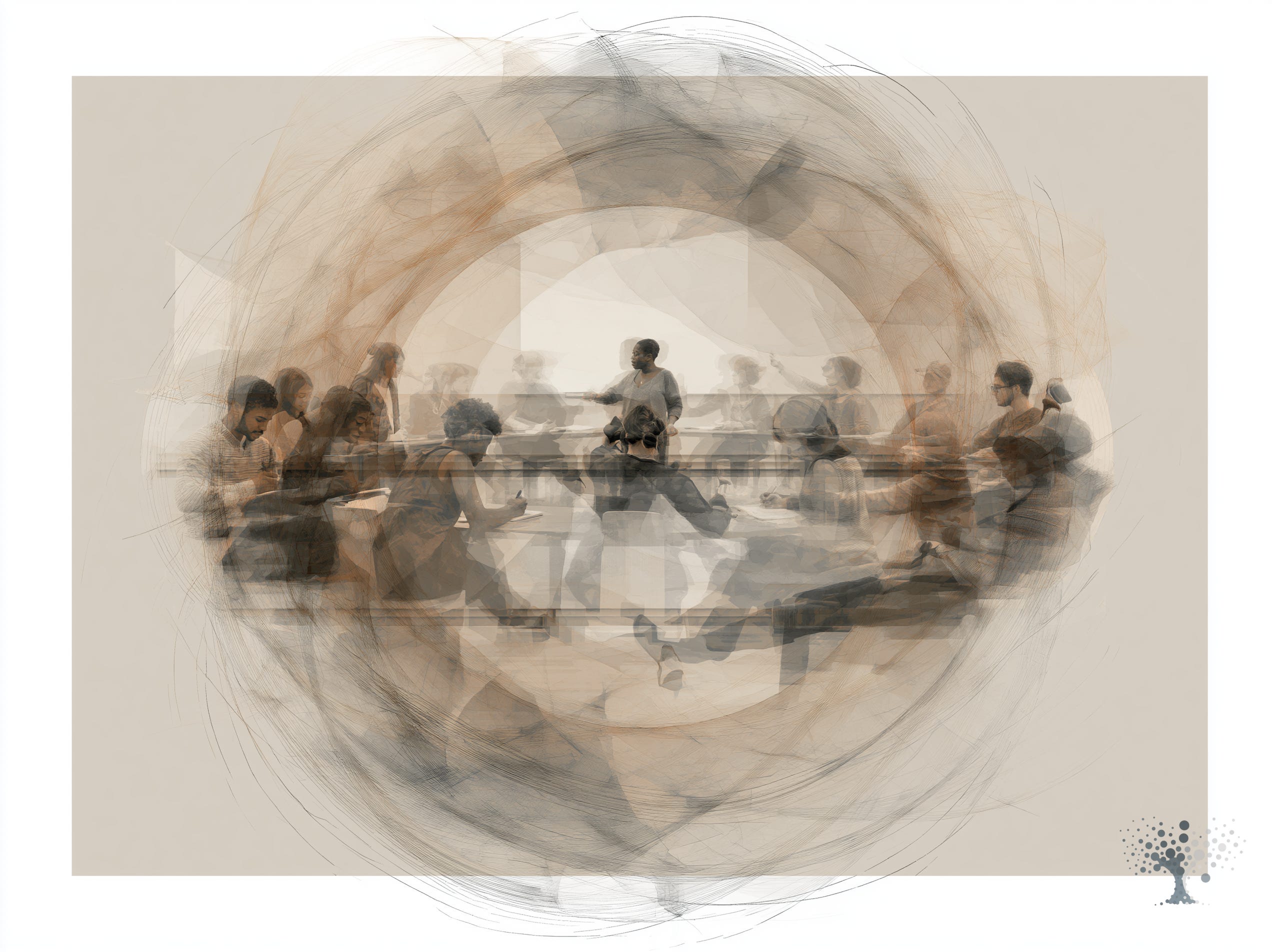
After The Wrong Game, I went looking for what the right one would look like in practice. I expected something sprawling. It turned out to be small. A handful of design choices, applied together, make a classroom that resists the proxy problem on its own and converts most attempts to game it into learning.
This could have been built fifteen years ago. The pedagogy was already worked out and the protégé effect was sitting in the research literature. What was missing was the room to run it in and the willingness to try.
The room arrived during the pandemic. Most American schools now run some kind of shared digital environment. Google Classroom, Canvas, Schoology, Microsoft Teams. The platforms vary, but each is a space where student work and conversation live in a form an agent can read. Schools paid for it when they had no choice, and the infrastructure has stayed.
I expected something sprawling. It turned out to be small. A handful of design choices, applied together, make a classroom that resists the proxy problem on its own and converts most attempts to game it into learning.
The willingness is more recent, and AI is the reason for it. The technology is forcing schools to confront problems they used to be able to ignore. Princeton’s honor code survived 133 years of cheating attempts before generative AI broke it, and equivalent erosions are happening at every level of the system. Schools that would have brushed off a co-op redesign five years ago are actively looking now, because the thing they were doing has stopped working.
The five rules
Work happens in a shared workspace.
Roles rotate.
The artifact accumulates over weeks.
The teacher reads avoidance patterns.
The class rewards peer-uptake.
None is radical on its own. Together they change what optimization means.
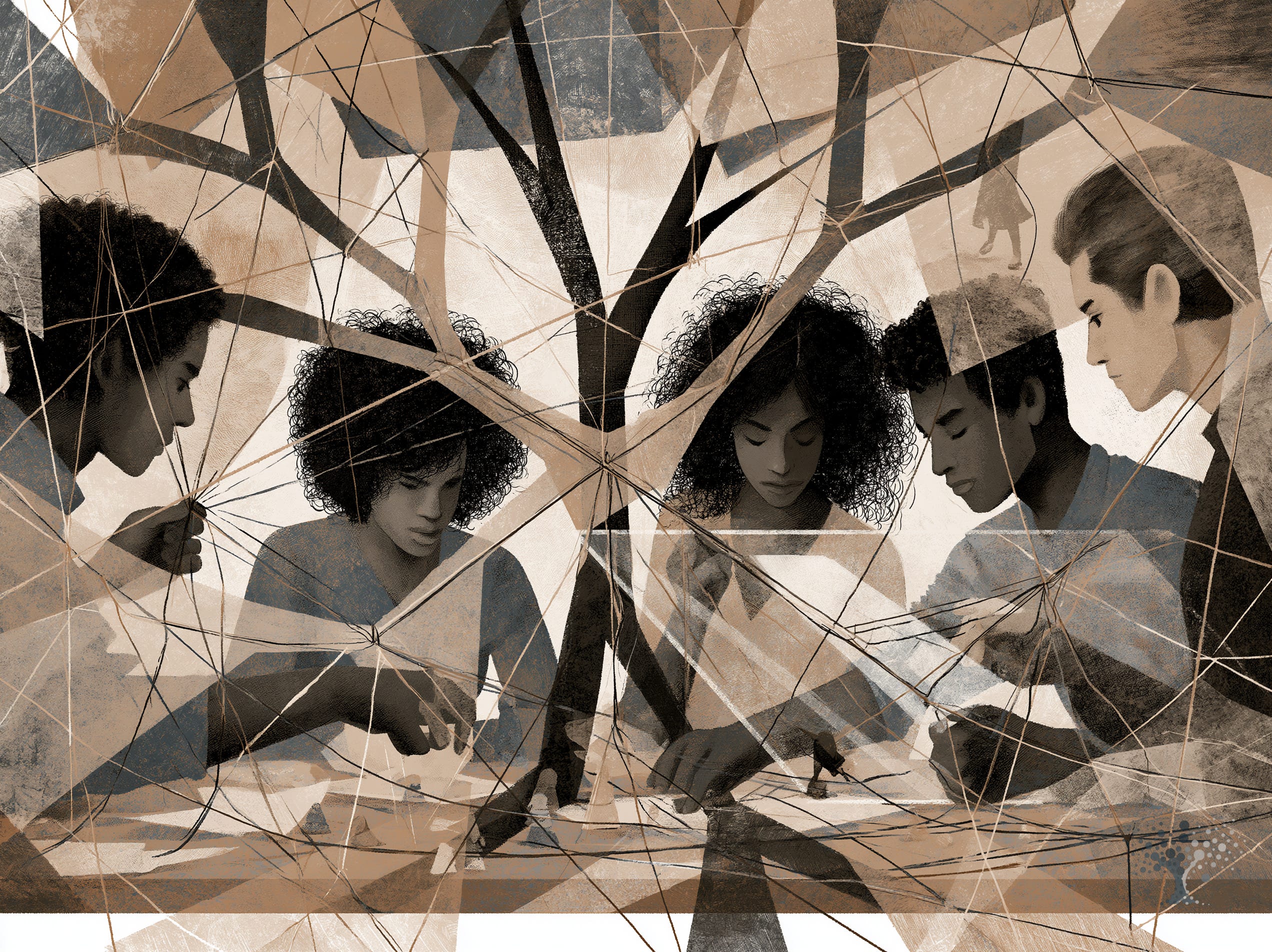
The shared workspace is the foundation. Instead of giving every student a private AI tutor in a separate session, the model sits in one environment the whole class can see. Students take turns directing it, watching what each prompt produces and where it fails. The teacher becomes one node in the room rather than the manager of thirty parallel ones.
Roles rotate across a project. The student who usually writes presents. The student who usually presents handles the data. The point is to break the most common form of collusion in group projects, which is the silent agreement to let one person carry the part neither of you wants to learn.
None is radical on its own. Together they change what optimization means.
The unit of assessment shifts from a final product on a deadline to an artifact that grows over weeks, with its version history visible. A short conversation at the end tells you whether the student inhabited the work or assembled it the night before. And what the teacher watches is gaps, not output. A student who never touches the financial section, or never speaks during synthesis, is telling you where the next intervention belongs. The reasons cluster: a real skill gap, intimidation by pace, simple free-riding. None calls for a multiple-choice test.
Peer-uptake holds the thing together. The system rewards whether the rest of the team built on what you contributed, not how much you produced. Fake engagement does not score, because the cohort ignores it. Goodhart’s Law has trouble landing here. The proxy is the social uptake of your work by other humans, and that is expensive to fake.
When gaming becomes learning
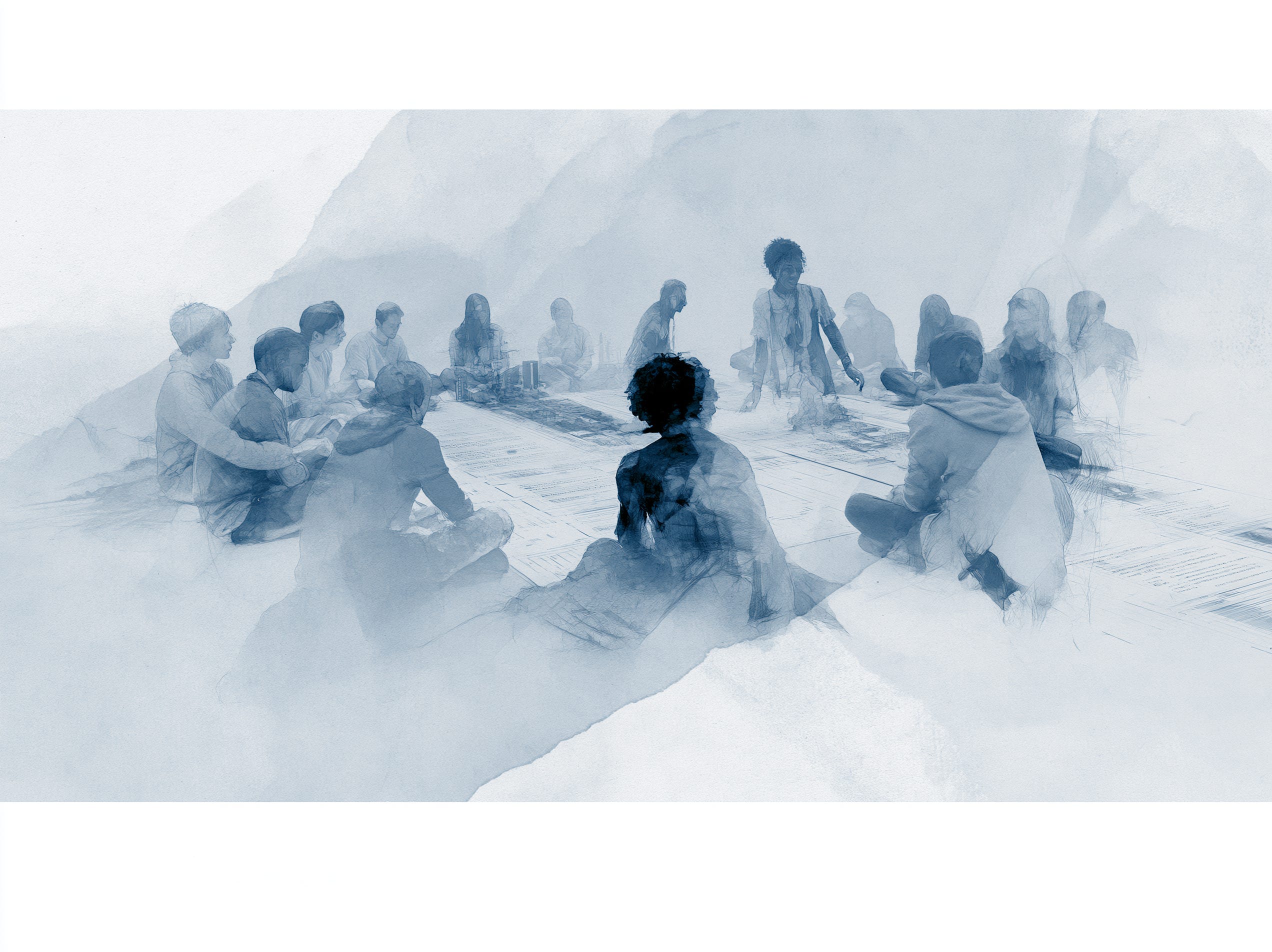
The unusual property the design produces is that the most efficient ways to cheat are indistinguishable from learning the material.
Two students decide to script the whole interaction. One pretends to struggle while the other pretends to teach. The teaching has to be specific enough that the rest of the team can use it, or peer-uptake won’t score. Their roles rotate next week, so each of them has to be ready to teach what they previously pretended not to know. And the artifact’s history will show whether the early misunderstandings ever got worked through.
Students think they are managing their grade. They are accidentally running a peer-led curriculum.
The list of behaviors required to fake this over a quarter is the curriculum. The cheat path and the learning path converge. There is even a name for the mechanism underneath: the protégé effect. People who teach a subject learn it more thoroughly than people who only study it. Students think they are managing their grade. They are accidentally running a peer-led curriculum.
The design has limits. A student going through a hard week can disappear inside a team for a stretch before the rotation pulls them back. A cohort can decide to be cynical, and no peer-uptake formula will rescue a room that has given up. New teachers will misread the signals for a while. The five rules describe a healthier room. They do not produce one on their own.
Off the kitchen table
The objection here is usually about homework. If the artifact gets iterated at home, a student can have an AI generate the contributions they will paste into the shared workspace tomorrow.
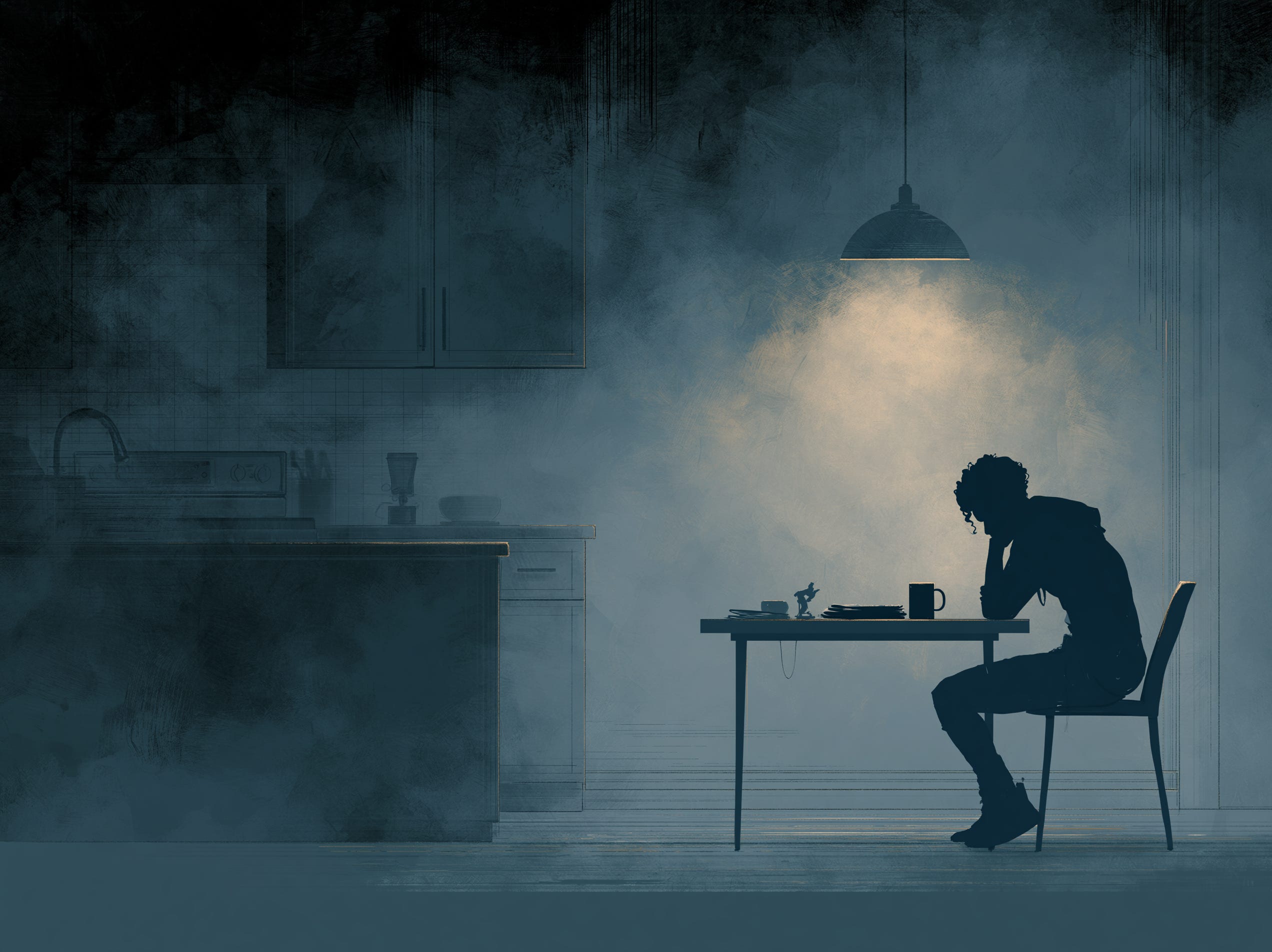
The fix is to move the work that counts into the room. Synchronous in-class iteration carries the assessment. Homework, in the old sense, becomes optional studying. Students who want to read ahead or use AI to learn a concept at home are encouraged to. None of it gets graded. The grade rests on what the student produces in front of the cohort, in the room, during the period.
The shared workspace is only active during class. Network controls keep external accounts out after hours, and the agent only sees what gets produced live in the room. The cohort itself does the rest of the work, because you cannot outsource your turn in the rotation to a bot on your phone when your teammate is two feet away waiting for you to explain the data. A teacher freed from grading homework piles at night also has bandwidth for real-time spot-checks. If a student’s contribution looks suddenly more advanced than their prior work, the teacher walks over and asks them to walk through the logic of the paragraph. If they freeze, the question is answered.
Moving the work that counts into the room narrows the gap between the student whose parents can help and the student whose parents are working a second shift. The room is the same room for everyone.
There is a quiet equity move in this. Homework has always favored students with quiet homes, stable internet, educated parents, and now good AI tools. Moving the work that counts into the room narrows the gap between the student whose parents can help and the student whose parents are working a second shift. The room is the same room for everyone.
The amplifier the teacher needs
The common worry about all this is teacher load. The good news is that the amplifier the teacher needs is the most tractable piece of the picture. Schools already run shared digital environments. Google Classroom, Microsoft Teams, Canvas, Schoology. Each is a persistent space where student work lives in a form an agent can read.
The first version of the amplifier is an agent that reviews the space on a schedule. It starts as a daily review, and becomes real-time as costs drop. The output is not a grade. It is the read the teacher would have if they had time to read everything themselves: which students contributed and which receded, which rotations are working, whether the artifacts that look done were iterated over time or assembled the night before. The teacher can also ask for a focused look at a specific team. The agent does not replace the teacher’s intuition. It feeds it.
The dungeon master in The Wrong Game was an unsustainable load on a human alone. With an agent watching the workspace, the role becomes something a teacher can sustain across real class sizes.
What lives outside the design
The next question is why every school is not already running this. The design works inside its perimeter, and the perimeter is full of problems that do not belong to the design itself.
The most-cited dealbreaker, teacher capacity, is actually the closest to solved. The shared workspace exists in most schools, the amplifier sits on top of it, and the remaining work is a change in posture rather than a change in tooling. The rest take longer. FERPA was not written for continuous behavioral data on minors, and updating it is slow. Running learning analytics across hundreds of students all day still costs more than most district budgets carry, though inference prices are dropping fast. Credentialing has the longest arc. AP Capstone and AP portfolio-based exams give schools a way to map internal co-op evidence to external credentials, and dual enrollment with local colleges does some of the same work. Turning any of this into the dominant pattern will take years.
All four are real, and all four sit outside the design itself. The most tractable can begin to dissolve this year on the platforms schools already run.
The stance
Inside is a design problem. There are teachers running versions of this today. Outside is a stewardship problem, and that runs at the pace of institutions.
The slowness of the outside does not disqualify the inside. Build the inside well in the classrooms where teachers want to try, and those rooms become the evidence that pulls the rest forward. The schools that figure out the co-op design first will give every other school a reason to reshape the conditions around it.
Build the inside well in the classrooms where teachers want to try, and those rooms become the evidence that pulls the rest forward.
The shape of the right game is becoming legible. A small classroom with one shared model. Students rotating through roles. An artifact growing over weeks inside the room rather than at home. A teacher watching what students avoid, with an agent reading the workspace when the teacher cannot. The design is sound. Teacher capacity, the most stubborn-looking piece, is closer to solved than it looks. The other conditions are catching up.
Sources and attributions:
Jason Prunty, The Wrong Game: Why AI Needs Dungeon Masters, Not Proctors, Designing Intelligence (May 2026).
On Princeton’s honor code: Princeton’s faculty voted on May 11, 2026 to require proctored exams beginning July 1, ending a practice that had governed examinations since 1893. The proposal explicitly cited generative AI as a primary cause. See Inside Higher Ed, Princeton Introduces Proctoring, Changing Honor Code (May 15, 2026); The Daily Princetonian (May 2026); Princeton Alumni Weekly.
On shared digital environments in US K-12: Google Classroom is used in approximately 60,000 of the roughly 129,000 K-12 schools in the United States, per ListEdTech market data and NCES school counts. See ListEdTech, The State of the LMS Market: Trends in K-12 (2024); NCES, Fast Facts: Educational institutions.
On FERPA: The Family Educational Rights and Privacy Act was enacted in 1974, well before modern behavioral telemetry and learning analytics existed. The “FERPA Gap” is documented in current student privacy scholarship, including the Parent Coalition for Student Privacy and the Future of Privacy Forum.
On AI inference cost trends: Performance equivalent to GPT-3.5 became roughly 280 times cheaper between late 2022 and late 2024, and median inference prices have been declining on the order of 50x to 200x per year. See Epoch AI, LLM inference prices have fallen rapidly but unequally across tasks.
On alternative admissions evidence: MIT’s optional Maker Portfolio, established in 2013, and Olin College’s Candidates’ Weekend (collaborative design challenges and group exercises) are early indicators of a broader pattern, not a finished structural shift.
The protégé effect literature includes Annis (1983) on learning-by-teaching, with more recent studies on teachable agents.
Goodhart’s Law: Marilyn Strathern’s compact form, “When a measure becomes a target, it ceases to be a good measure.”
The credentialing bridge through AP portfolio-based exams and dual enrollment is documented in College Board program materials and the dual enrollment literature out of CCRC at Teachers College, Columbia University.